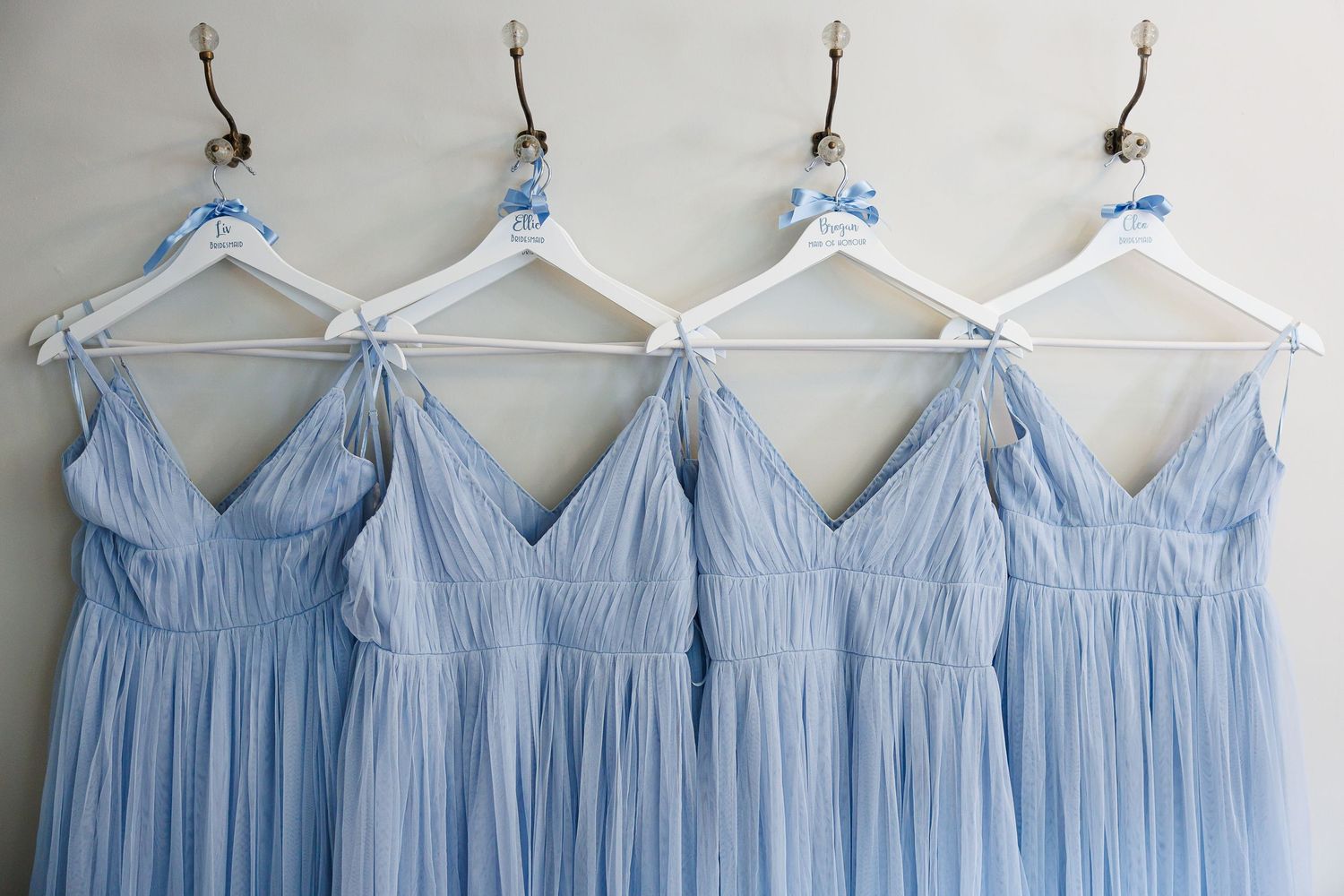
Grab a cuppa, settle down with your partner and read through this together.
Hopefully it will help you understand what will really matters for your wedding.
Before the Wedding
A little preparation before the day can make everything feel easier once the wedding actually arrives. None of this is about turning your wedding into a military operation. It is simply about removing a few avoidable stresses so you can enjoy it properly.
Weddings have a habit of taking longer than expected.
Hair and makeup runs over. Someone cannot find their shoes. A button comes loose. Traffic is heavier than expected. Guests stop you for a chat just when you are meant to be somewhere else.
A little breathing room in your timeline means those small delays stay small. If every part of the day is planned down to the minute, one late moment can quickly affect everything that follows.
The best timelines give you enough structure to keep things moving, but enough space to actually enjoy what is happening.
Group photos are important, but they can very quickly take over the time after your ceremony.
Think about the combinations you genuinely want rather than every possible variation of the same people. Around ten groups is usually plenty.
It also helps to tell everyone involved beforehand that they will be needed for photos. Otherwise there is always a good chance someone will disappear to the bar at exactly the wrong moment.
Choosing one or two people who know both families well can also be a huge help when it comes to gathering everyone together.
I will naturally photograph the people, reactions and relationships I see throughout the day, but I cannot always know the history behind them.
If a grandparent is especially important to you, a friend has travelled halfway around the world, or someone has played a big part in getting you to this point, tell me.
You do not need to give me a huge list. Just letting me know about the people who carry extra meaning helps me understand your wedding a little better.
Weddings can bring complicated family relationships together in one place.
If parents are separated, certain relatives should not be photographed together, or there are any relationships I should handle carefully, please let me know before the wedding.
It means I can quietly work around those situations without putting you or anyone else in an awkward position on the day.
Planning something your guests do not know about?
It could be fireworks, singing waiters, a surprise performer, a special entrance or something completely unexpected.
You absolutely do not need to spoil the surprise for anyone else, but please tell me. Knowing what is coming means I can be in the right place before it happens rather than trying to react once everyone else does.
You do not need a huge hotel suite for beautiful getting-ready photographs.
Good natural light and a little clear space are much more useful.
If you have a choice of rooms, somewhere near a good-sized window usually works brilliantly. Keeping suitcases, bags and packaging together in one corner also helps enormously when things start getting busy.
It is a tiny job, but one worth doing before the wedding morning.
Check the bottoms of shoes, jewellery boxes, perfume bottles and anything else you might want photographed. Shop labels have a remarkable ability to survive until five minutes before the ceremony.
The less fiddly admin there is on the morning, the better.
Phones, keys, handbags, cards, medication and anything else important still need looking after, even on a wedding day.
Choose someone you trust to be responsible for them so you are not constantly wondering where your belongings have gone.
It also means you are less likely to find yourself walking into the ceremony or reception holding your phone simply because nobody else knew where to put it.
Nerves can make breakfast feel like the last thing you want, but try to eat something before the ceremony.
A wedding morning can be surprisingly physical and you may not get another proper chance to eat for several hours.
The same goes for water. Champagne is lovely. Water is also useful.
Getting Ready
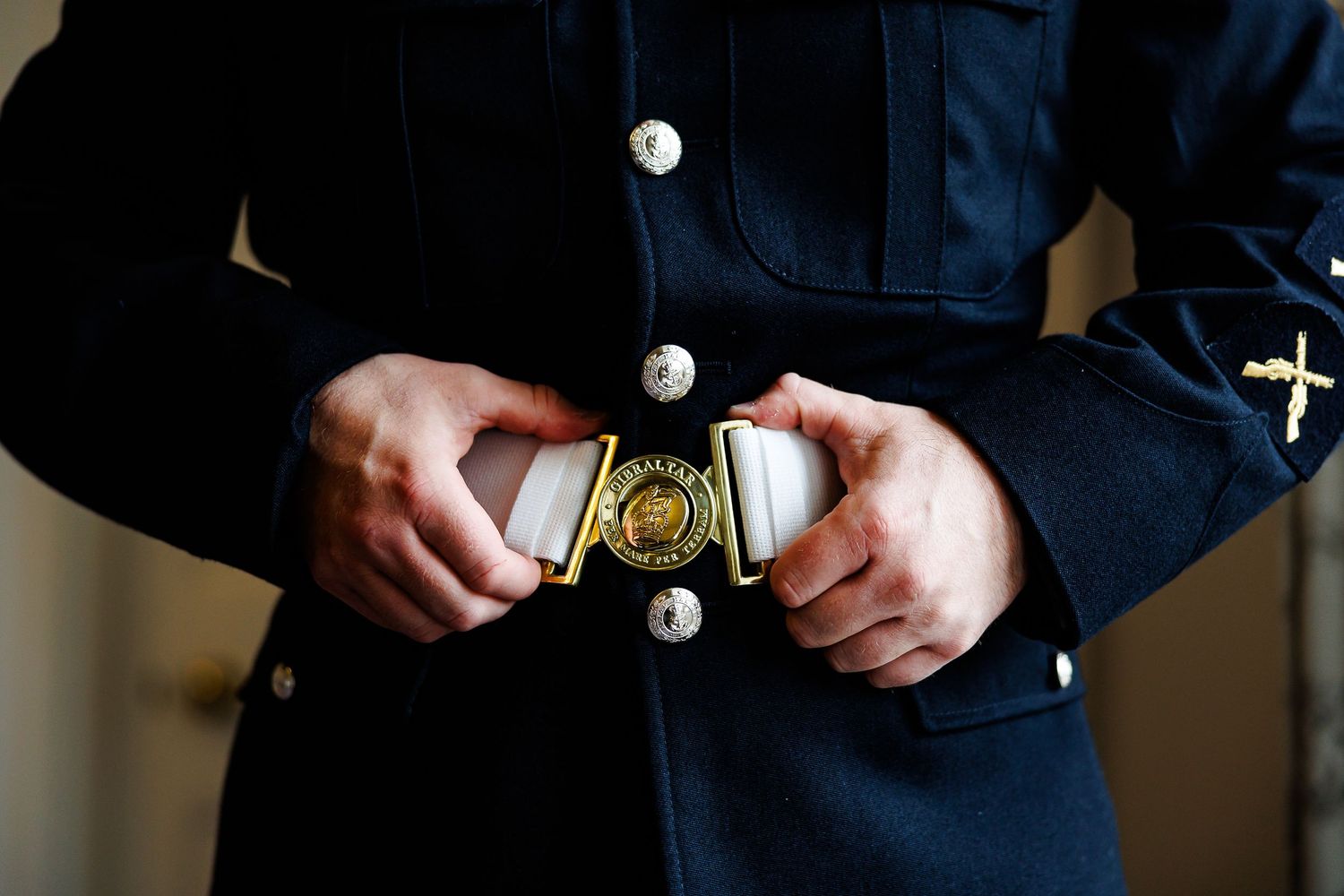
The getting-ready part of the day is often where everything starts to feel real. There might be music on, drinks being poured, people coming and going, a few nerves, plenty of laughs and at least one person looking for something they were holding two minutes ago.
Whether you are getting into a dress, tying a tie, fastening cufflinks or just trying to remember where you left your shoes, a little preparation helps keep this part of the day relaxed.
Getting ready nearly always takes longer than expected.
Hair and makeup can run over. Shirts need ironing. Buttons take longer than expected. Someone cannot find a cufflink. A dress needs fastening. Shoes are in another room. There is always something.
Try not to leave getting dressed until the latest possible moment. Finishing a little early gives you time to breathe, have a drink, chat with the people around you and enjoy those final moments before the ceremony.
Wedding mornings create clutter remarkably quickly.
Suitcases, carrier bags, clothes, food wrappers, makeup, chargers, suit bags and half-open boxes can end up everywhere.
You do not need to keep the whole room spotless. Having one reasonably clear area near a window is usually enough and gives us somewhere calm to use for photographs without everyone suddenly needing to tidy the room.
If possible, get dressed somewhere with plenty of natural light.
A large window is usually far more useful than an impressive room with very little light.
You do not need to worry about exactly where to stand. I will work that out when I arrive. Just avoid choosing the darkest corner if there is a brighter option available.
If you would like photographs of a parent helping with an outfit, a best man sorting a tie, friends helping with a dress, or someone seeing you fully ready for the first time, make sure they are dressed before you are.
It sounds obvious, but it is very common for the person you want involved to still be halfway through getting ready themselves.
There may be a few things you would like photographed before the ceremony.
That could be shoes, jewellery, perfume, aftershave, cufflinks, watches, invitations, ties, pocket squares, family keepsakes or something completely personal to you.
You do not need to gather every wedding-related item in one place. Just keep the things that genuinely matter somewhere easy to find.
Bouquets and buttonholes sometimes arrive damp after sitting in water.
Give stems a quick check before holding them against dresses, shirts or suits.
It is a tiny thing, but considerably easier than dealing with a water mark just before leaving.
Phones, wallets, keys and vape devices can create surprisingly obvious shapes through suits and trousers.
Before the ceremony, hand anything bulky to someone you trust.
Your photographs will look better and you will probably enjoy not carrying everything around with you for the next few hours.
You do not need to behave differently because I am there with a camera.
If everyone is laughing and messing about, carry on. If things are quiet and you are feeling nervous, that is fine too.
Some people get emotional. Some crack jokes constantly. Some suddenly become very quiet as the ceremony gets closer.
All of it is part of the story.
The time you need to be at the ceremony and the time you need to leave are not the same thing.
Allow time for gathering belongings, getting downstairs, sorting transport, parking and walking from wherever you arrive.
A few spare minutes at the end of getting ready are far nicer than watching the clock all the way to the ceremony.
The Ceremony
This is the part of the day where everything becomes real.
You have done the planning, made the decisions, got everyone there and now you finally get to stand together and get married. The best thing you can do is be present in it.
There are also a few very simple things that make a surprisingly big difference to your photographs.
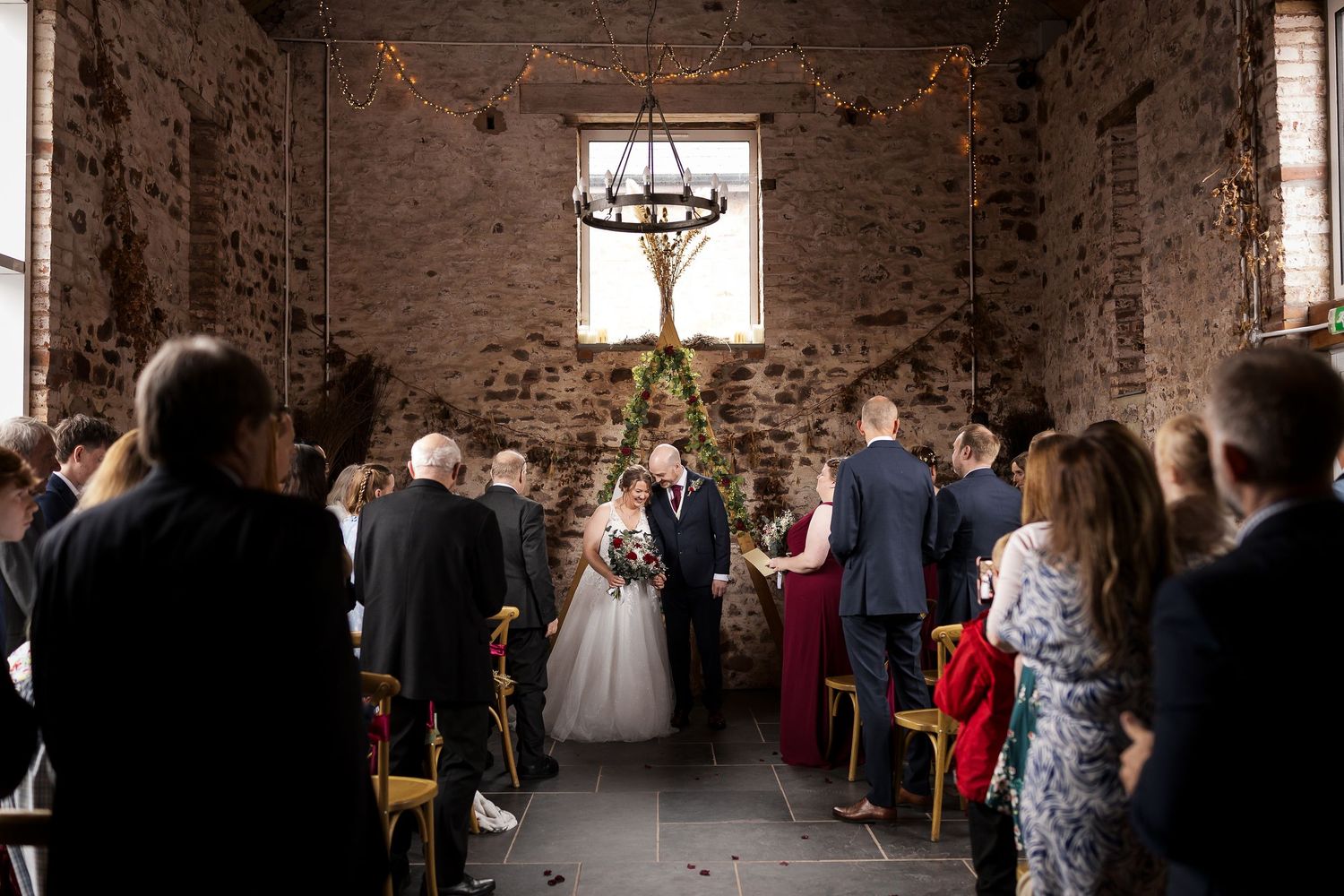
This sounds almost too obvious, but couples often end up standing slightly off-centre during the ceremony.
That can mean one of you is partly hidden behind guests, chairs or flowers, and it can make the whole scene feel visually unbalanced.
When you get to the front, take a second to make sure you are roughly centred in the aisle and facing each other comfortably.
You do not need to measure it. Just being aware of it helps.
It is very easy to become aware of everyone watching you and start looking at the registrar, celebrant, guests or even the photographer.
Try to keep coming back to each other.
When you are saying your vows, exchanging rings or listening to the words being spoken, those little looks between you are often some of the most meaningful photographs from the whole day.
Nerves make people look down.
It happens all the time, especially during vows and ring exchanges.
Try to keep your head up and look at each other. Not because you need to pose, but because that is where the connection is.
You will also remember far more of the moment if you are actually looking at the person you are marrying.
Ring exchanges can happen incredibly quickly.
There is no need to rush.
Hold the ring gently, take your time and enjoy the moment. If possible, avoid covering the ring completely with your hand as you put it on.
A tiny pause is all it takes.
You do not need to turn it into a performance, but do not make it a nervous half-second peck either.
Take your time.
You have just got married. Enjoy it.
That extra second gives you a chance to actually feel the moment and gives me a much better opportunity to capture it.
The walk down the aisle can disappear in seconds.
People often speed up without realising because of nerves or excitement.
Try to slow it down just a little. Look around. Take people in. Smile at each other.
The same applies when you walk back out after the ceremony.
You only get to do it once.
Once the ceremony is over, couples often suddenly start looking towards the camera.
You really do not need to.
Look at each other, look at your guests, laugh, celebrate and enjoy the fact that you have just got married.
Those reactions are far more interesting than both of you checking where I am standing.
When you reach the end of the aisle, give yourselves a second before disappearing.
A kiss, a hug, a laugh or even just stopping to look at each other can create a brilliant moment.
It also gives your guests time to react around you.
Bags, coats, programmes and pushchairs can creep into the aisle surprisingly quickly.
If your venue allows it, keeping the aisle as clear as possible makes a big difference both visually and practically.
It is worth asking someone in the wedding party to have a quick look before the ceremony starts.
Guests taking photographs is part of modern weddings and I am not going to tell everyone to put their phones away.
The bigger issue is when somebody steps into the aisle or leans right across it.
That can block the view for other guests and sometimes for me too.
If this matters to you, a gentle request before the ceremony for guests to stay in their seats while taking photos is usually enough.
Probably the most important tip of all.
You do not need to find me. You do not need to smile at me. You do not need to wonder whether I got the photograph.
That is my job.
Your job is simply to get married.
Confetti & Group Photos
The ceremony is over, everyone is buzzing, and suddenly there are hugs, congratulations, confetti and people heading in every direction.
This part of the day can be brilliant fun, but it is also where things can become chaotic very quickly. A little planning helps keep it flowing without making it feel organised to death.
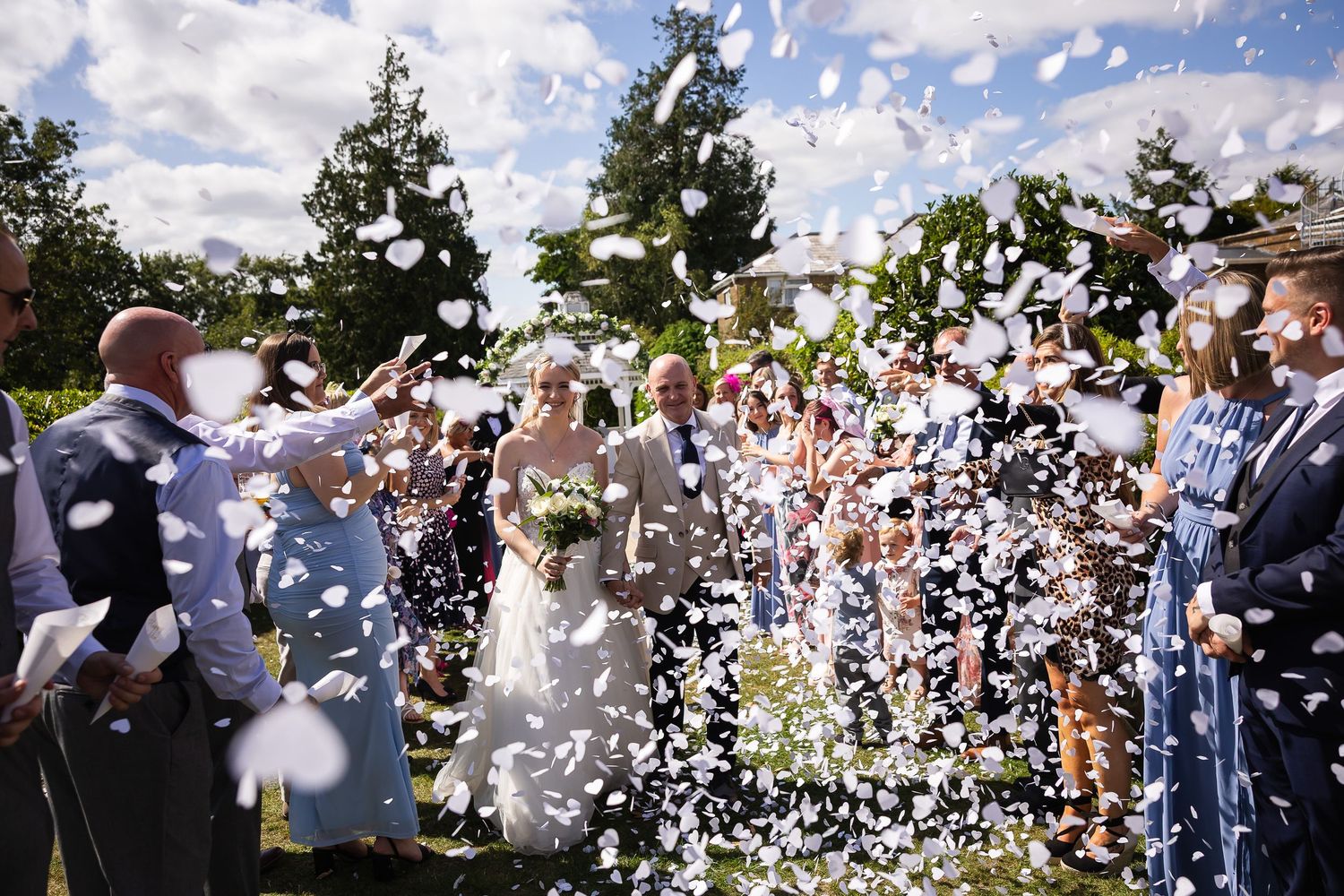
Confetti photographs work best when there is plenty of it.
A handful between several people will usually disappear almost instantly. If you want that proper cloud of confetti around you, make sure there is enough for everyone to have a generous handful.
It is also worth checking what your venue allows beforehand. Some only permit biodegradable or dried petal confetti.
This is a surprisingly important one.
Ask guests to throw the confetti up and over you rather than directly into your faces.
It looks better, hangs in the air longer and means you are far less likely to spend the whole walk squinting.
Just like the aisle, people often rush this part because they are excited.
Take your time.
Stay close together, look at each other and enjoy it. You do not need to look at me.
The best confetti photographs usually come from the laughter and reactions rather than a perfectly timed smile at the camera.
Group photos are important, but they can easily take over the reception if the list gets too long.
Around ten combinations is usually plenty.
Think about the photographs you are genuinely likely to want in years to come rather than every possible variation of the same people.
If someone is needed for a group photo, let them know before the wedding.
Otherwise, the moment we need them is often exactly when they have gone to the bar, checked into their room or disappeared for a chat somewhere.
A quick heads-up makes the whole process much quicker.
I will organise the photographs, but I may not know that "Uncle Steve" is the man in the blue suit standing behind me.
Having one person from each side who knows the families can make a huge difference.
They can help gather the next group while I am photographing the current one, which keeps everything moving without lots of waiting around.
Large family photographs are usually best done first.
Once someone has finished all the groups they are needed for, they are free to go and enjoy themselves rather than being repeatedly called back.
It also means the group photos naturally become quicker and smaller as we work through them.
There is nothing wrong with having a drink while everyone is gathering, but glasses and bottles can quickly become part of every photograph.
If possible, put them down just before stepping into a group photo.
The same goes for phones, handbags and anything else you do not really want appearing in the picture.
It probably will.
People are excited, everyone wants to talk to you and somebody will inevitably wander off at exactly the wrong moment.
That is normal.
I will keep things moving and get the important photographs without turning this part of the day into a school photo session.
Once the important group photographs are done, that is it.
You do not need to spend the next hour smiling at the camera.
Go and have a drink, talk to your guests and enjoy the reception. I will carry on photographing what is happening around you.
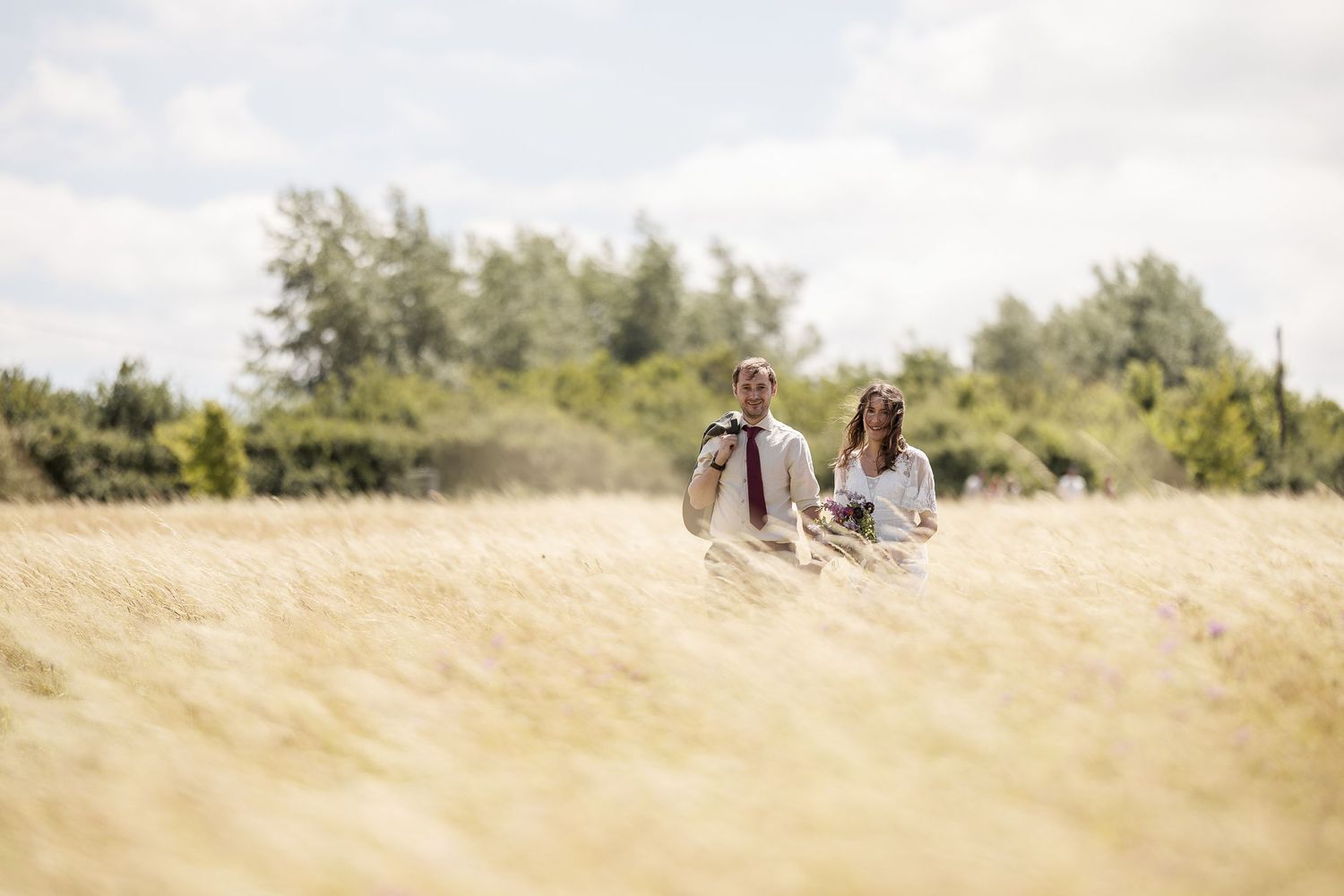
Couple Time
For a little while, the wedding day becomes just the two of you.
Couple photos are not about disappearing for an hour while everyone waits for you. I usually only need around twenty minutes, and I want it to feel like part of your wedding rather than a photoshoot dropped into the middle of it.
For many couples, it also becomes one of the few chances they get all day to properly stop and spend some time together.
Almost everyone tells me they are awkward in front of a camera.
You do not need to arrive knowing what to do with your hands, where to look or how to stand.
I will give you enough direction to make sure you look great, but I am far more interested in the way you naturally interact with each other than putting you into a series of poses.
You do not need to keep looking towards the camera.
Talk to each other. Walk together. Laugh. Hold hands. Enjoy having a few minutes away from everybody else.
The less attention you give me, the more the photographs will feel like you.
Weddings happen in the real world.
Grass may be damp. Paths may be dusty. Dresses get marks on them and shoes eventually stop looking brand new.
I will never ask you to do something that is likely to ruin what you are wearing, but try not to spend the whole day worrying about keeping everything absolutely pristine.
A wedding outfit with a little evidence that somebody actually had a wedding in it is perfectly normal.
You do not need a huge amount of time to create great photographs.
Around twenty minutes is normally enough for us to take a wander, find some good light and create a varied set of images without keeping you away from your guests.
If you are enjoying yourselves and want to keep going, brilliant. If you are ready to head back to the party, we will.
A beautiful photograph does not require visiting every photogenic corner of your venue.
Often the best location is somewhere very close to where you already are.
Good light, a clean background and the two of you enjoying yourselves are far more important than marching around the grounds ticking off locations.
The best light does not always arrive exactly when the timeline says it should.
If the evening suddenly gives us beautiful sunshine, dramatic clouds or a great sunset, I might suggest disappearing outside for another five or ten minutes.
You never have to, but sometimes those spontaneous little trips create something special.
If it rains, we adapt.
We might find somewhere covered, use the venue differently or wait for a break in the weather.
Sometimes all we need is five dry minutes.
Do not spend the day worrying about the forecast. I will keep an eye on what the weather is actually doing and make the most of whatever we get.
This is the one bit I would really encourage you to do even if there were no cameras involved.
At some point while we are away from everyone, stop.
Look at each other. Look back towards your wedding. Take in the fact that all those people are there because of you.
Wedding days move incredibly quickly, and sometimes it is only when you step away from the noise for a moment that you realise it is actually happening.
Then we can head back and carry on with the party.
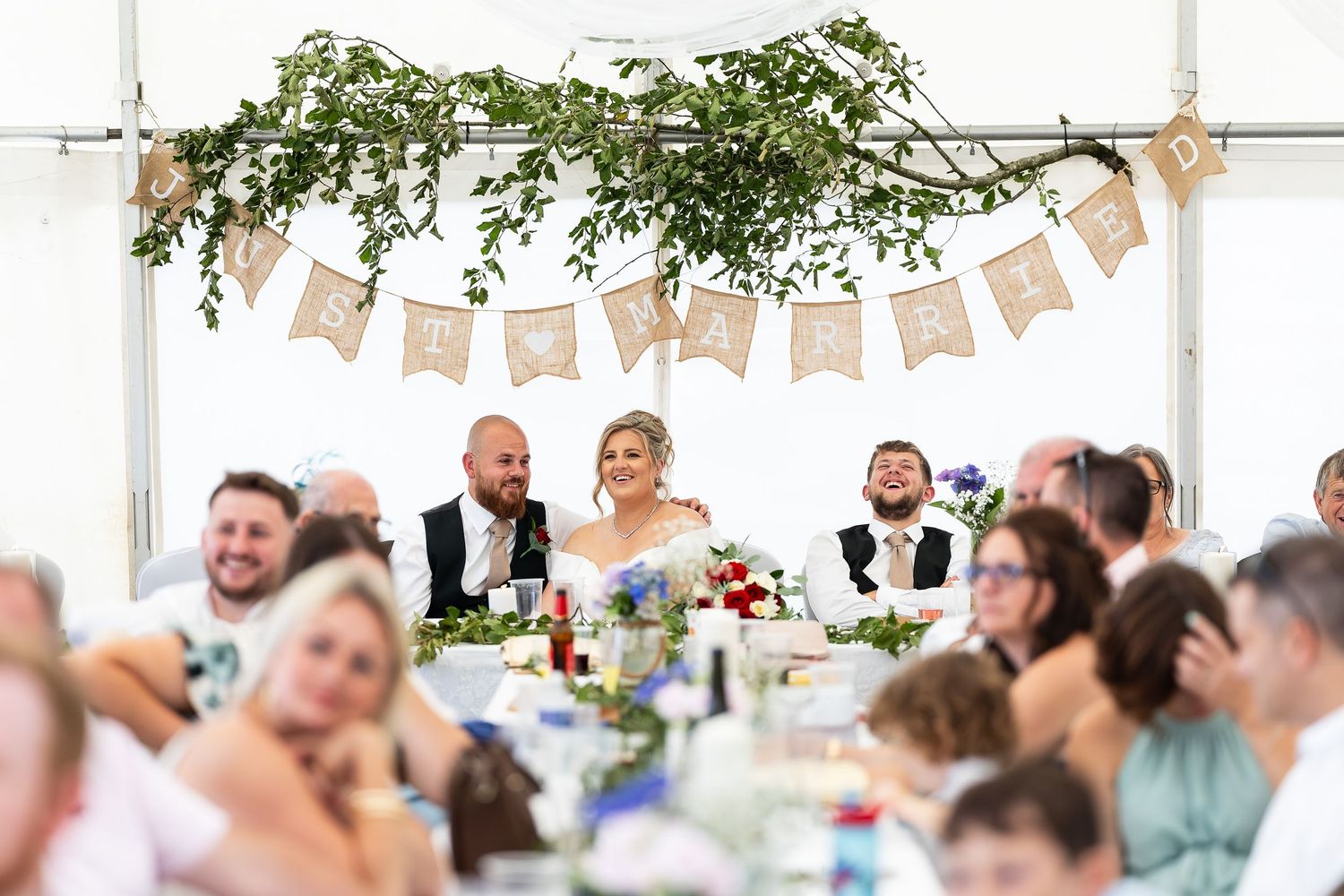
The Reception
Once the formalities are out of the way, the day usually starts to loosen up.
People settle in, conversations get louder, drinks appear, children disappear under tables and the atmosphere changes completely.
This part of the day is less about planning photographs and more about giving the wedding space to happen.
It is very easy to spend the reception being pulled from one thing to the next.
Try to leave enough space in the timeline to simply talk to your guests.
You do not need to greet everyone formally or work the room like a politician. Just give yourselves time to drift, chat and enjoy the fact that everyone is there with you.
Those little conversations often become some of the best photographs of the day.
If the ceremony ends and the next hour is packed with confetti, groups, couple photos, drinks, speeches and food, the whole afternoon can start to feel like a timetable.
A little breathing room between things makes a huge difference.
It also means if something runs ten minutes late, the rest of the day does not immediately start slipping.
Once guests are seated for food, there is no need to worry about everyone looking perfect.
People will talk, laugh, lean across tables, pull faces and react to speeches.
That is exactly what I want.
The reception should feel lived in, not staged.
If you are planning a top table or sweetheart table, think about what is behind you.
A clean background, windows, flowers or something meaningful will usually photograph better than a fire exit sign or a stack of venue equipment.
You do not need to redesign the room around photography, but it is worth noticing what will be directly behind you for a large part of the meal and speeches.
If somebody has planned a surprise speech, gift, performance or moment during the reception, a quiet heads-up helps enormously.
I do not need every detail.
Just knowing something is coming means I can be ready for the reaction rather than finding out at the same time as everyone else.
The best speeches are rarely the most polished ones.
They are usually the ones where somebody forgets a line, gets emotional, tells a story they probably should not have told, or makes the whole room laugh.
Do not worry about making them look tidy for photographs.
The reactions matter far more than the performance.
If there are grandparents, parents or other people whose reactions really matter to you, it helps if they are seated somewhere they can actually see the speeches and the main table.
That sounds obvious, but seating plans sometimes separate the people you most want involved in the moment.
This is not glamorous advice, but it matters.
If I am fed while you are eating, I am ready again when you are.
If suppliers are served much later, that can mean missing speeches, cake cutting or the point where everyone suddenly decides to head outside.
The same applies to other suppliers who need to be present for key moments.
You do not need to keep checking where I am.
You do not need to stop conversations because you think I am photographing you.
And you definitely do not need to smile every time you spot me.
The more you ignore me, the better this part of the day usually looks.
Glasses move. Chairs move. Napkins end up everywhere. Someone spills something. Somebody's child falls asleep on two chairs.
That is the wedding.
You do not need to keep resetting the room so it looks perfect.
By this point, perfection is much less interesting than personality.
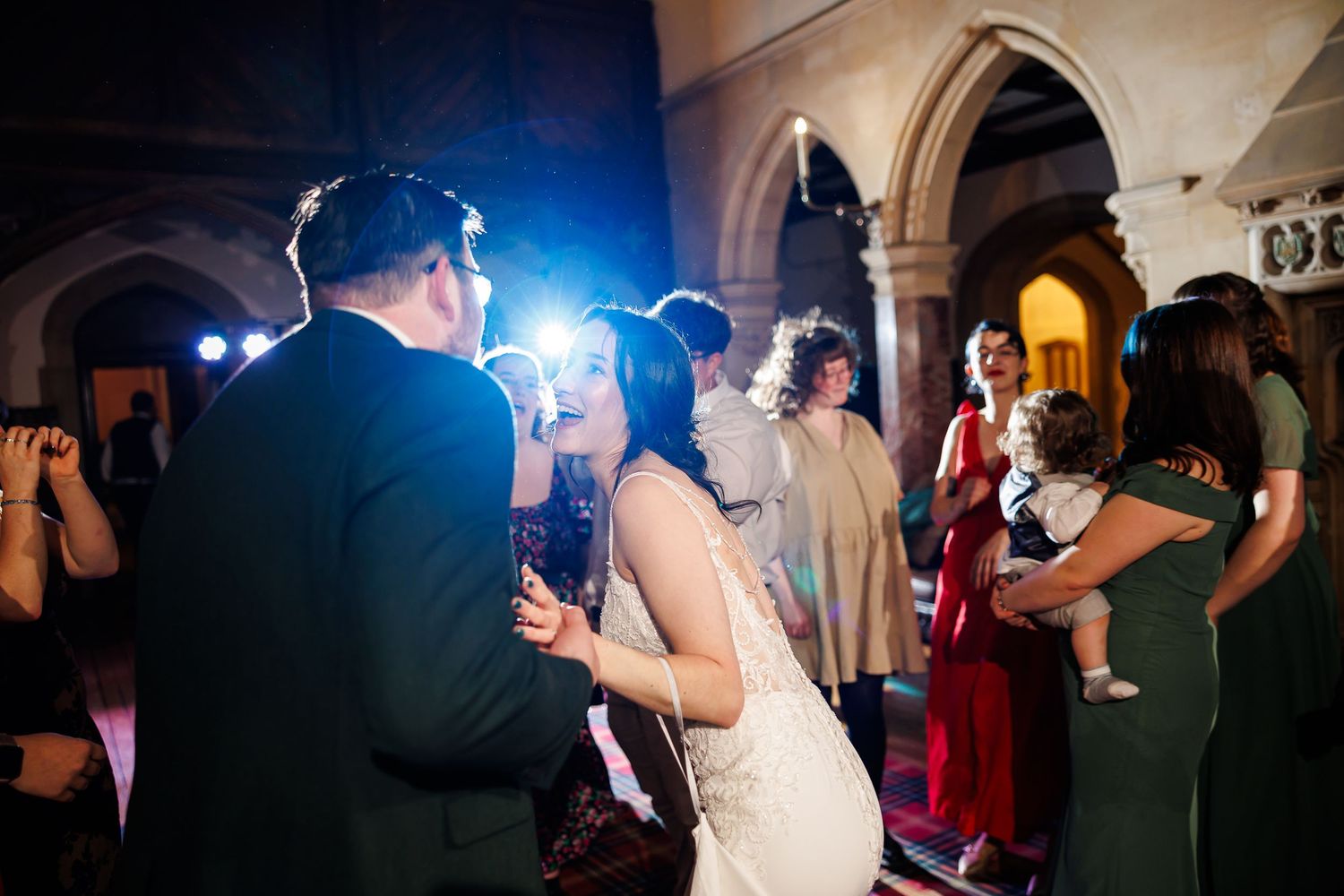
The Evening
By the evening, most of the structure has gone.
The speeches are finished, the food has been eaten, ties are starting to loosen and people are ready to celebrate properly.
This is often where some of the most energetic, funny and completely unplanned photographs happen.
Try not to pack too many things into the first hour of the evening.
Cake cutting, first dance, sparklers, games and other entertainment can all work brilliantly, but if they are stacked too closely together the evening can feel rushed.
A little space between things gives everyone time to settle in and actually enjoy them.
You do not need choreography unless you genuinely want it.
A simple first dance can be just as meaningful.
Stay close, talk to each other, laugh if it feels awkward and try not to worry about where I am.
It is much more about the moment than the moves.
If you do not want to spend three minutes dancing alone in front of everyone, make sure your DJ or band knows.
Inviting guests onto the floor after the first verse or chorus can turn the first dance into something much more relaxed.
Once people start dancing, let them get on with it.
The best dance floor photographs usually come from people completely forgetting there is a camera nearby.
Big reactions, terrible dancing, shoes coming off and people singing every word are exactly what makes this part of the day fun.
If you are having sparklers, fireworks, confetti cannons, a surprise performance or anything else happening later in the evening, let me know beforehand.
Timing and position matter with these things, so a little warning gives me a much better chance of capturing them properly.
Sparklers look best once it is actually dark.
In summer, that can be much later than people expect.
It is worth checking sunset time and speaking to your venue before deciding when to do them.
Sometimes the light outside suddenly becomes brilliant for ten minutes.
If that happens, I may suggest we step outside briefly.
You do not have to abandon the party for long. Often five or ten minutes is enough.
If possible, avoid putting the bar, photo booth and main entertainment too far apart.
If guests are spread across several rooms, the dance floor can lose energy very quickly.
Keeping things reasonably close helps the evening feel busier and more connected.
By this point, hair will have moved, dresses may be marked and shirts may no longer be tucked in properly.
That is absolutely fine.
The evening is not about looking pristine.
It is about having a brilliant time.
The evening disappears faster than almost any other part of the wedding.
Talk to people. Dance badly. Sing too loudly. Hug your friends.
Do not spend the final hours checking your phone or worrying about whether everything is running exactly to schedule.
You have done the planning.
Now enjoy it.
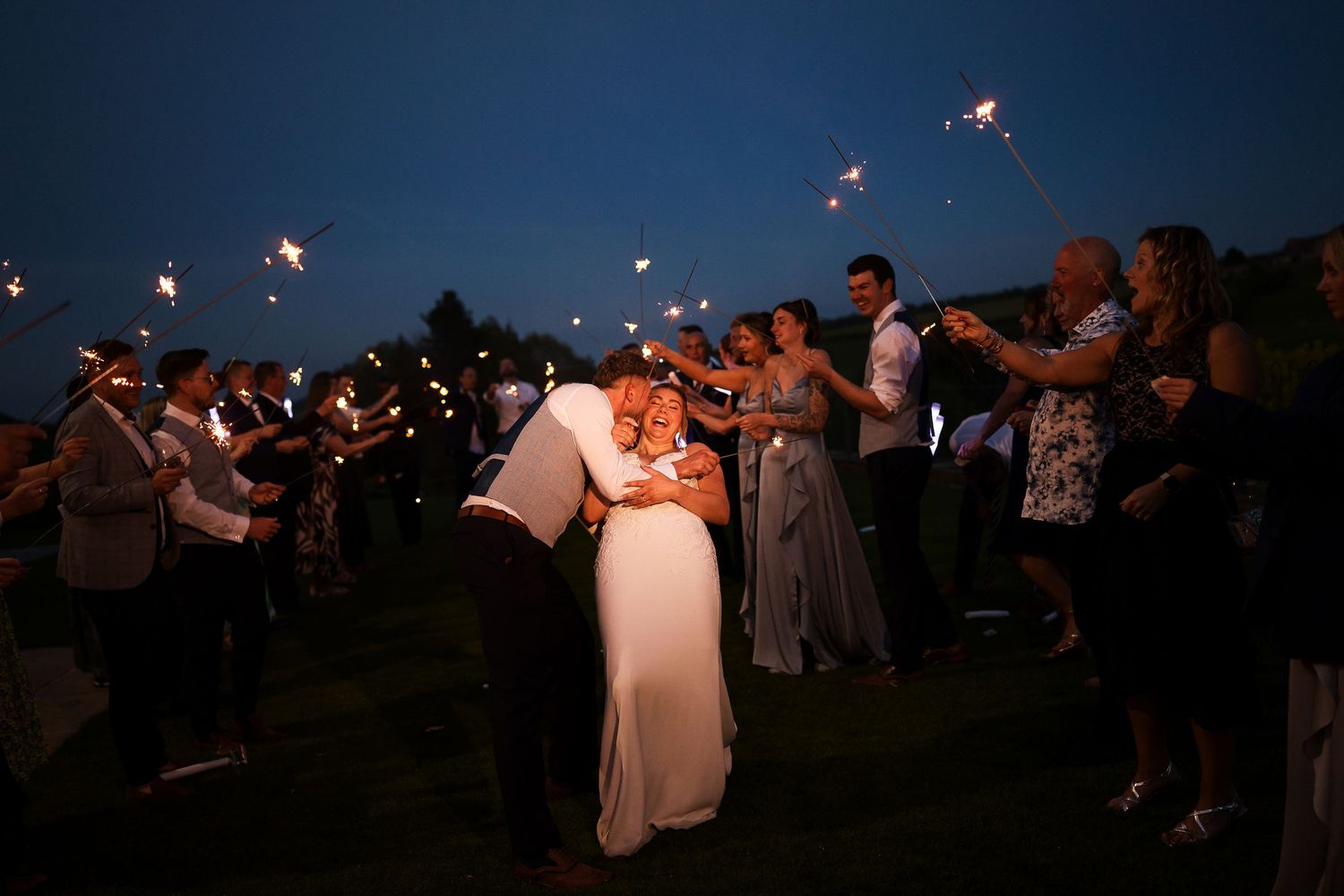
A Few Final Thoughts
There is a lot of advice in this guide, but none of it is a set of rules.
Your wedding does not need to run perfectly. People will be late. Plans will change. The weather may do something completely different from the forecast. Someone will probably lose something important for ten minutes.
That is all normal.
Some of the best moments on a wedding day are the ones nobody planned.
A reaction during a speech. A child doing something ridiculous. A sudden burst of evening light. A quiet conversation with someone you love.
If every minute is packed with something that has to happen, there is less room for those moments to appear.
Perfect timelines, perfect weather, perfect flowers, perfect hair, perfect photographs.
None of it matters as much as how the day actually feels.
Your dress might get dirty. Your hair might move. The table plan might not survive contact with your guests.
That does not make the day less beautiful. It usually makes it more real.
It sounds obvious, but couples can spend surprisingly little time together on their own wedding day.
There are always people to greet, things to do and places to be.
Every now and then, find each other again.
Even a few quiet minutes together can make the whole day feel less like something happening around you and more like something you are actually experiencing together.
You have booked a venue, suppliers and people whose job is to help make the day work.
Let them.
You should not be checking timings, chasing florists, organising guests or worrying about where I am standing.
That is what the people around you are there for.
At some point during the day, stop.
Not for a photograph. Not because somebody has told you where to stand.
Just stop.
Look around at the people who came. Listen to the noise. Take in the room. Look at each other.
You have probably spent months, sometimes years, planning this day.
Give yourselves a few seconds to realise that you are actually in it.
Once the wedding starts, forget most of what you have just read.
You do not need to spend the day thinking about where the light is, whether you are standing in the middle or what photographs I might be taking.
That is my job.
Your job is to be there, with the people you love, and enjoy your wedding.
Everything else can look after itself.